National Convention Center and University in Tashkent, Uzbekistan
项目地点:乌兹别克斯坦,塔什干
项目面积:20000平方米
项目类型:公共建筑
设计时间:2024年
项目状态:概念设计
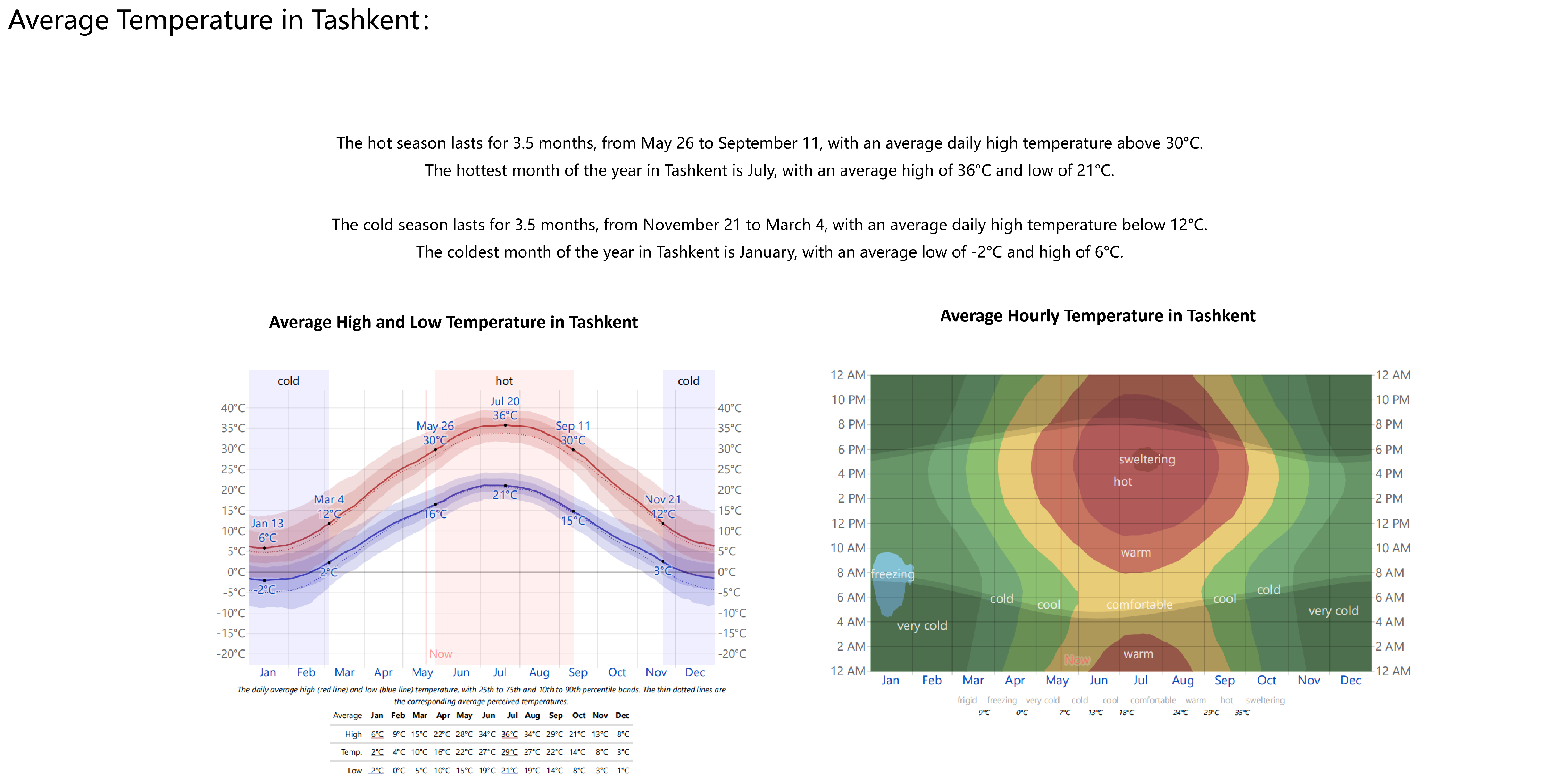
该项目位于乌兹别克斯坦首都塔什干,位于奇尔奇克绿洲,气候炎热、干旱、干燥,降雨量少,森林资源匮乏,荒漠化严重。它是乌兹别克斯坦最大的城市和经济文化中心。因此,将文化融入自然,保持建筑绿色刻持续呼吸,是本项目的核心思想。项目主要功能为国家会议中心及大学,所以设计将以人为本的城市功能布局和城市空间的相互创造,提供开放的休闲绿地和清晰的办公及学习空间结构,践行海绵城市和低碳绿色的理念。同时,大学生的年轻一代可能对传统文化缺乏兴趣。为了解决这个问题,我们将传统文化与现代设计紧密结合,使文化得以继续传承。
Located in Tashkent, the capital of Uzbekistan, the site lies within the Chirchiq Oasis. The region is characterized by a hot, arid, and dry climate, with low rainfall, scarce forest resources, and severe desertification. As the largest city in Uzbekistan and the country’s economic and cultural center, Tashkent demands an architecture that integrates culture into nature and maintains a green, continuously “breathing” environment — this forms the core concept of the project.The main functions of the project are a national convention center and a university. Therefore, the design adopts a people-oriented approach to urban functional layout and the creation of urban spaces. It provides open leisure green areas and a clear spatial structure for office and learning, while practicing the principles of a sponge city as well as low-carbon and green development.Additionally, the younger generation of university students may show limited interest in traditional culture. To address this, the design closely integrates traditional culture with contemporary design, ensuring that cultural heritage continues to be passed down.
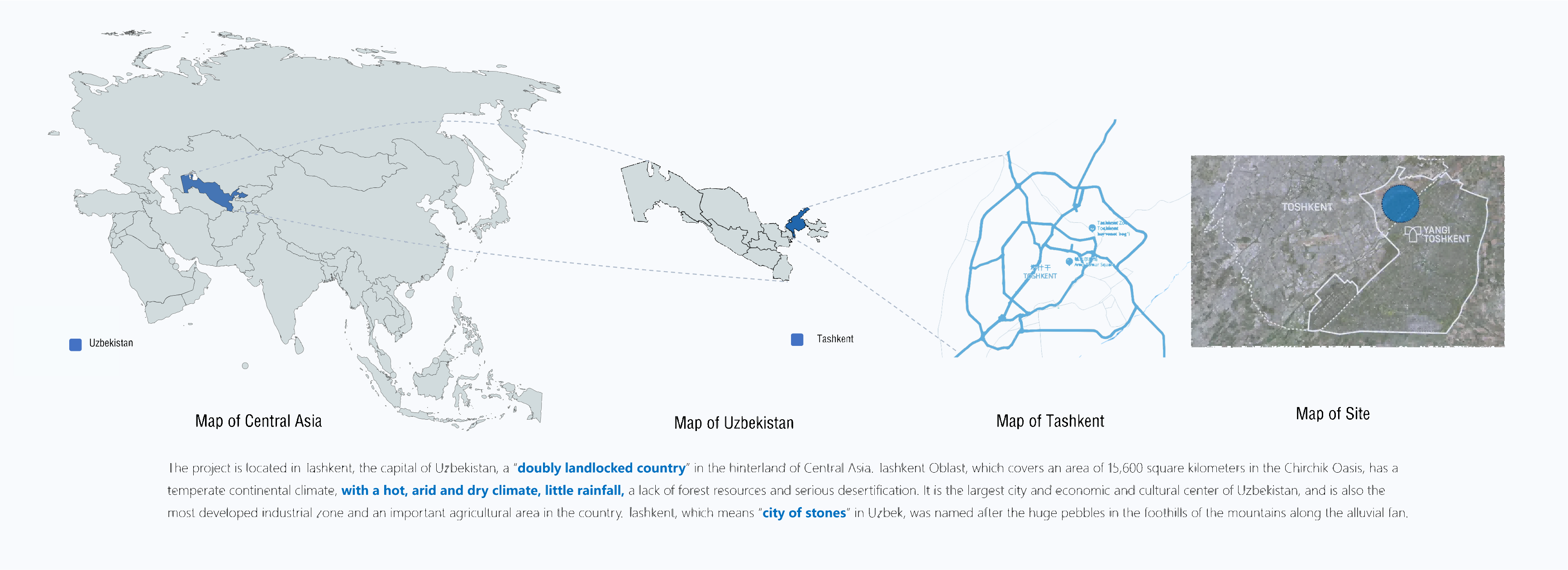
▼地理位置,Site
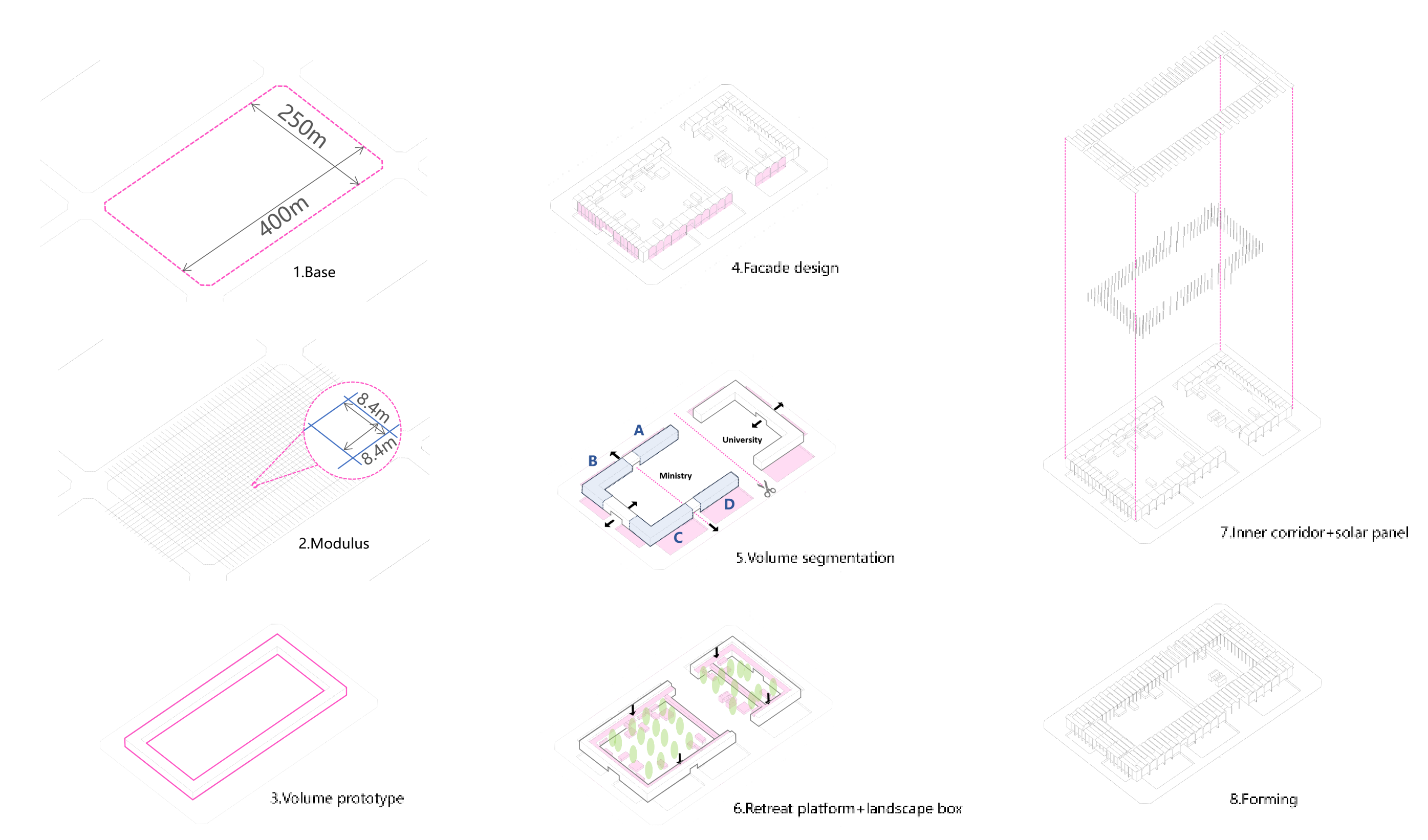
▼形体生成,Form generation
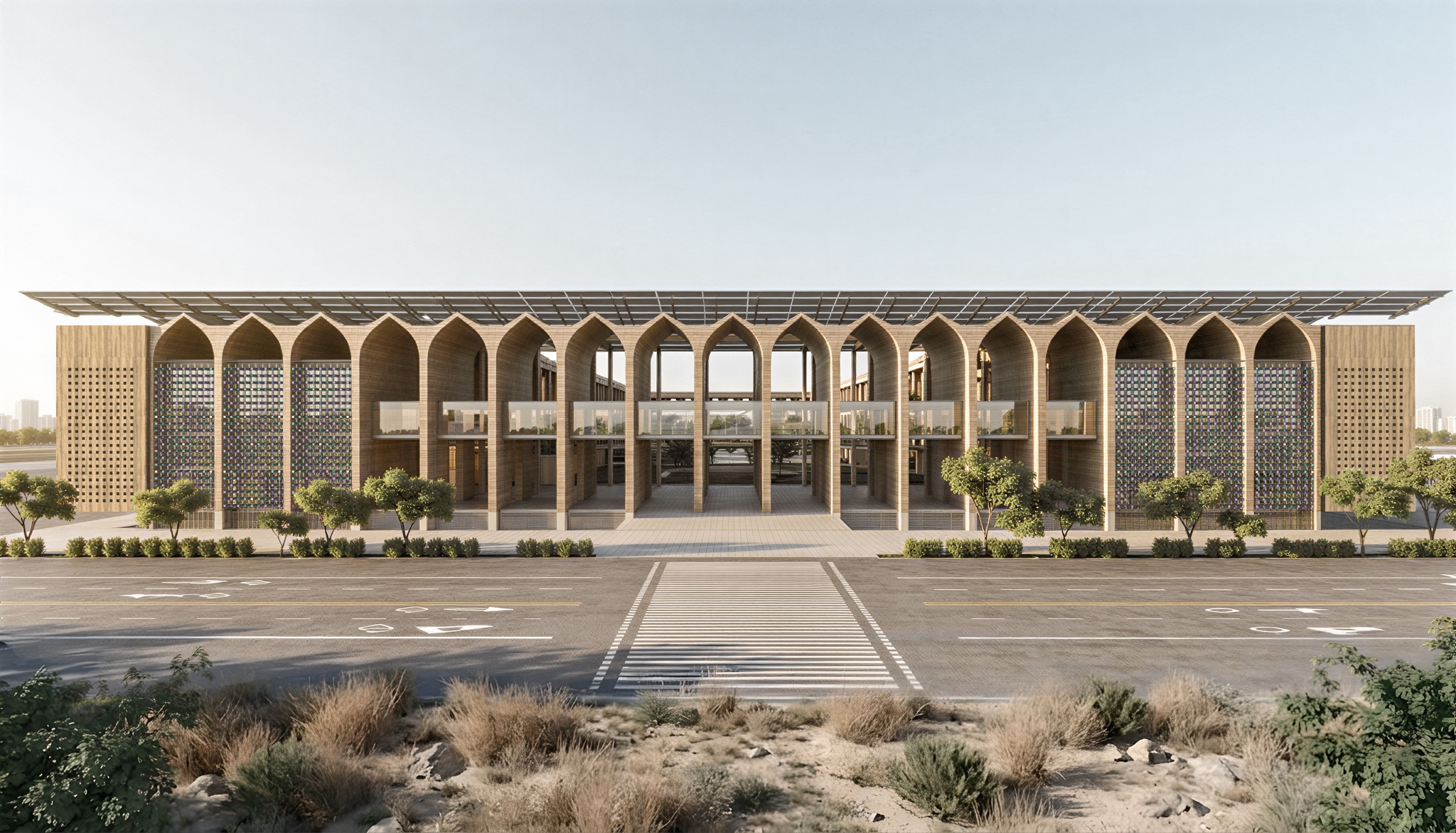
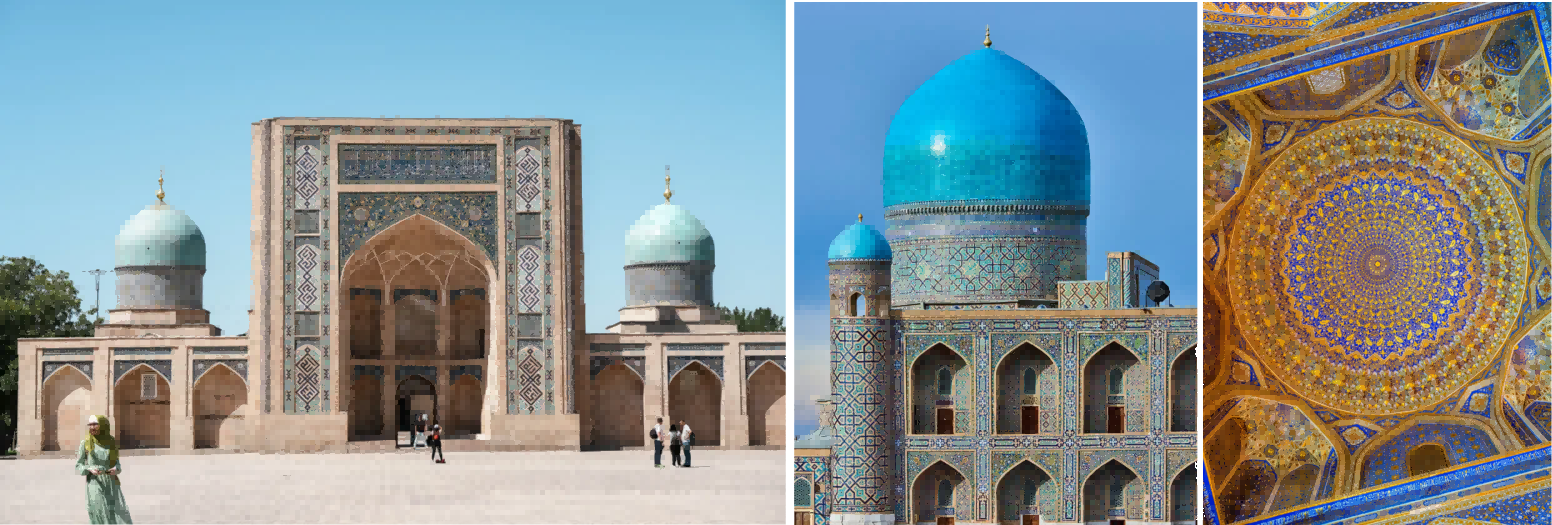
乌兹别克斯坦的宗教建筑是当地宗教艺术的杰作。伊斯兰教在此占据主导地位,因此大多数宗教建筑都属于伊斯兰建筑风格,充满了对伊斯兰教的敬仰与虔诚。本设计借鉴了其宗教建筑独特的拱门作为建筑元素,展现了中亚建筑艺术的辉煌与壮丽。
The religious architecture of Uzbekistan is a masterpiece of local religious art. Islam is dominant in the region, so most religious buildings belong to the Islamic architectural style and are filled with reverence and devotion to Islam. This design draws on the distinctive arches of its religious architecture as an architectural element, showcasing the splendor and magnificence of Central Asian architectural art.
▼乌兹别克斯坦文化建筑,Cultural Architecture of Uzbekistan
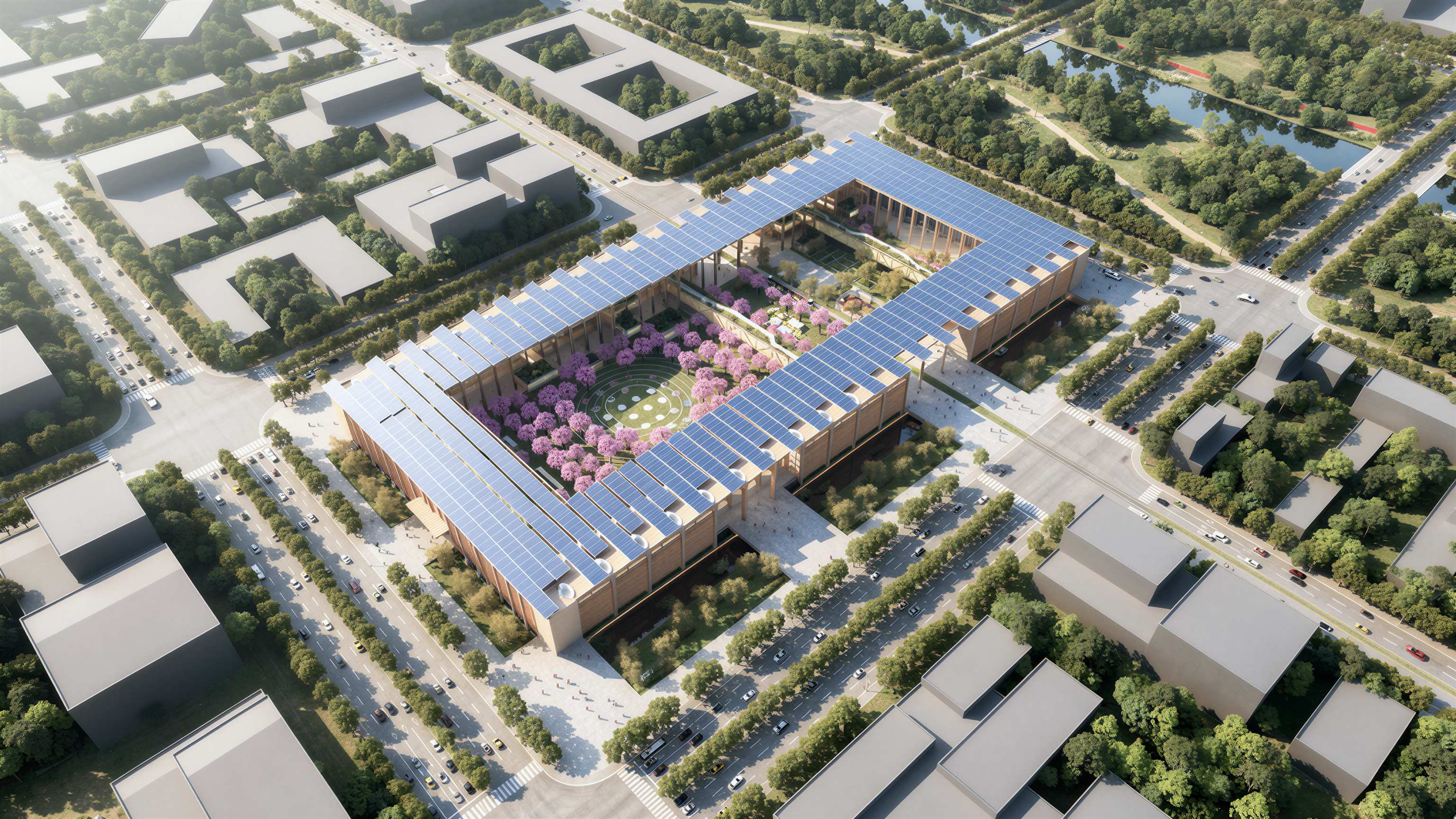
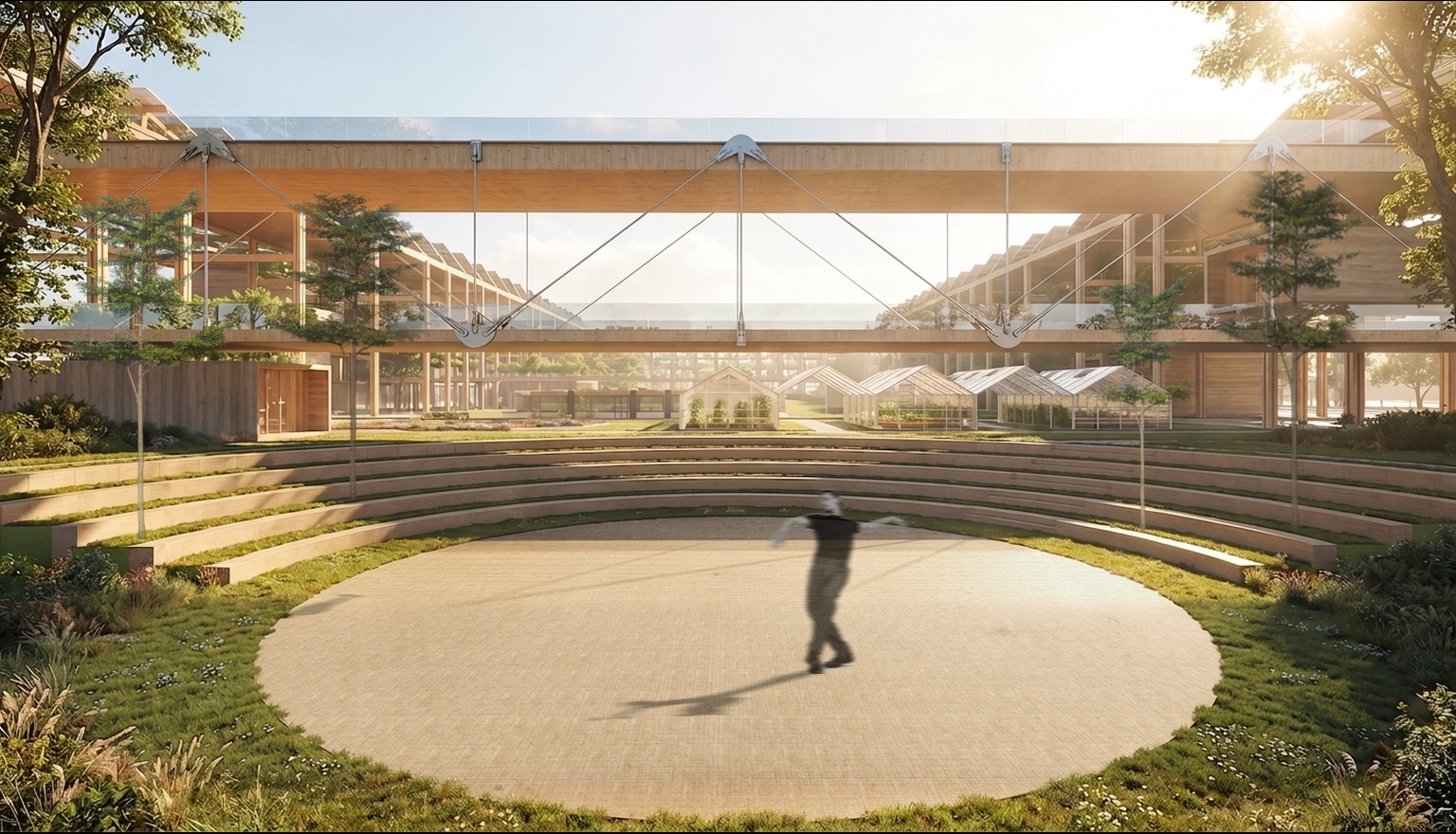
▼方案效果,Scheme Effect
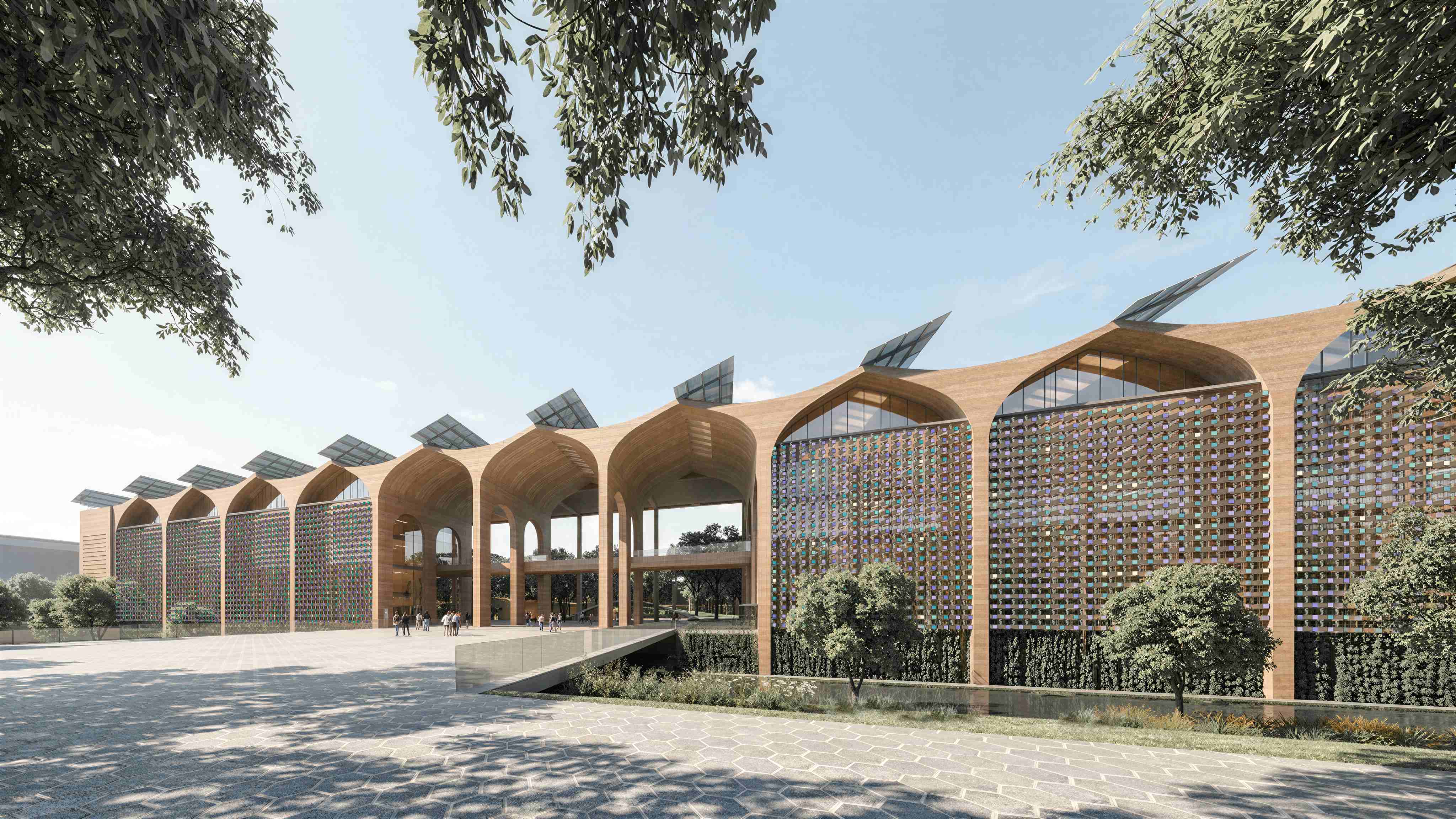
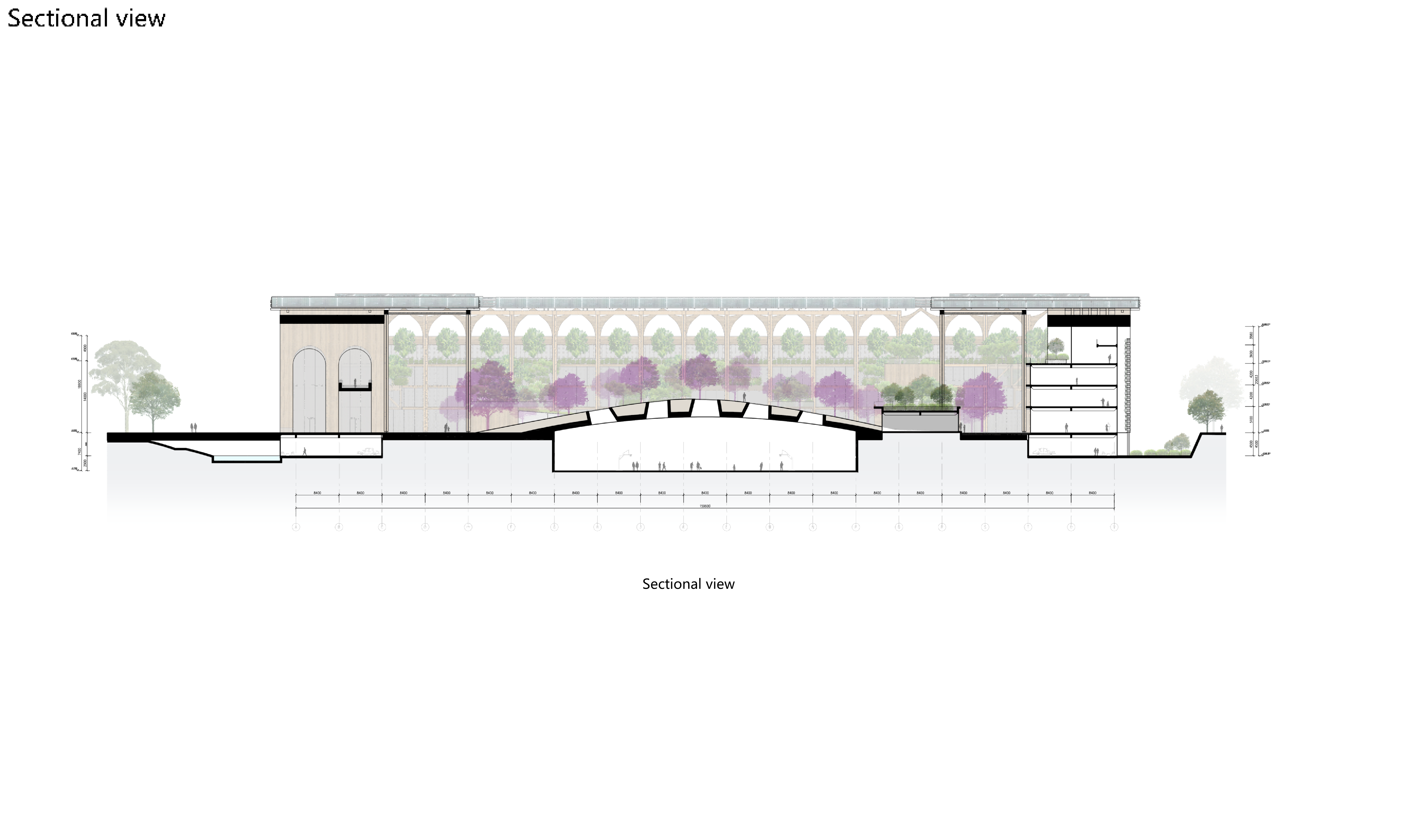
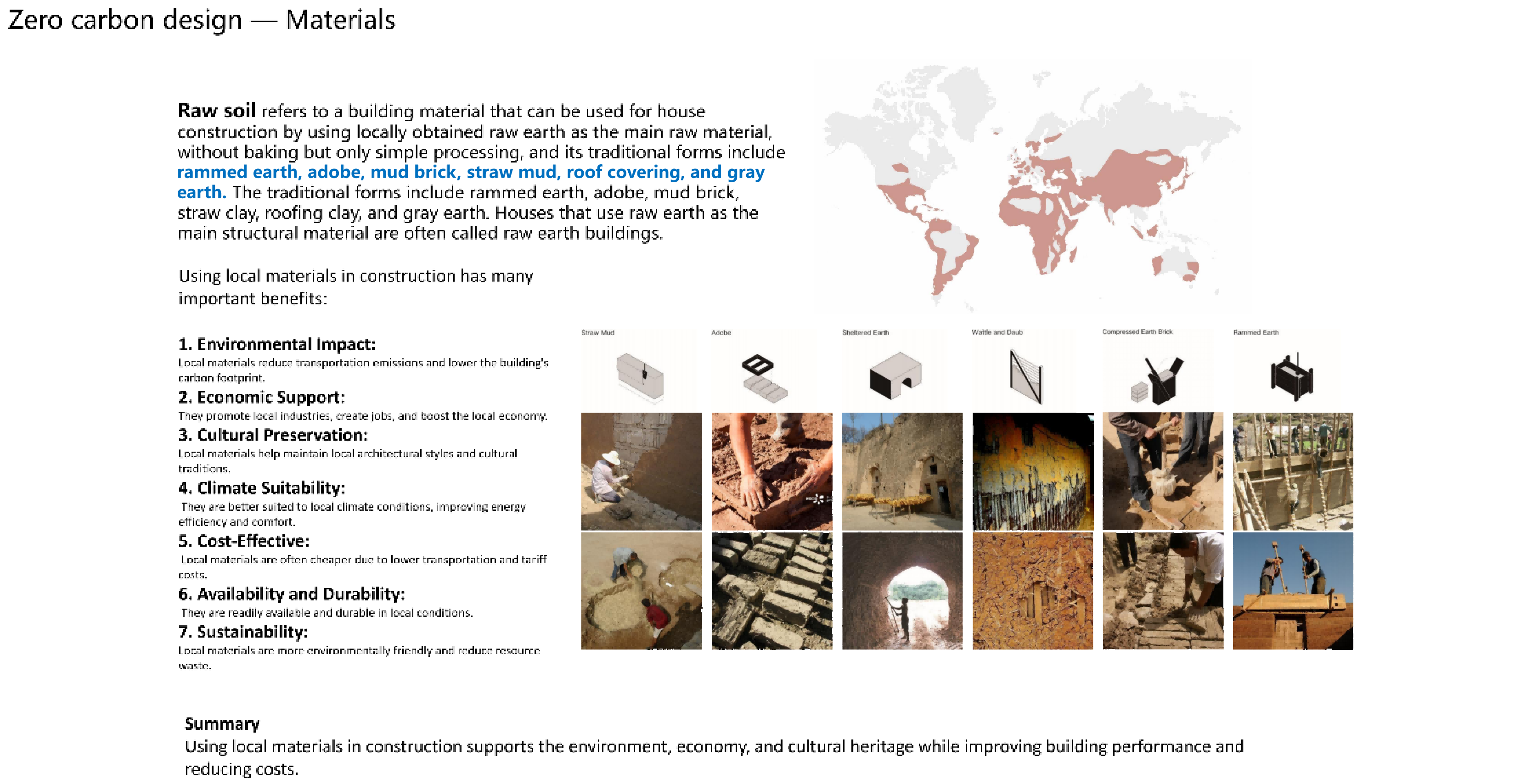
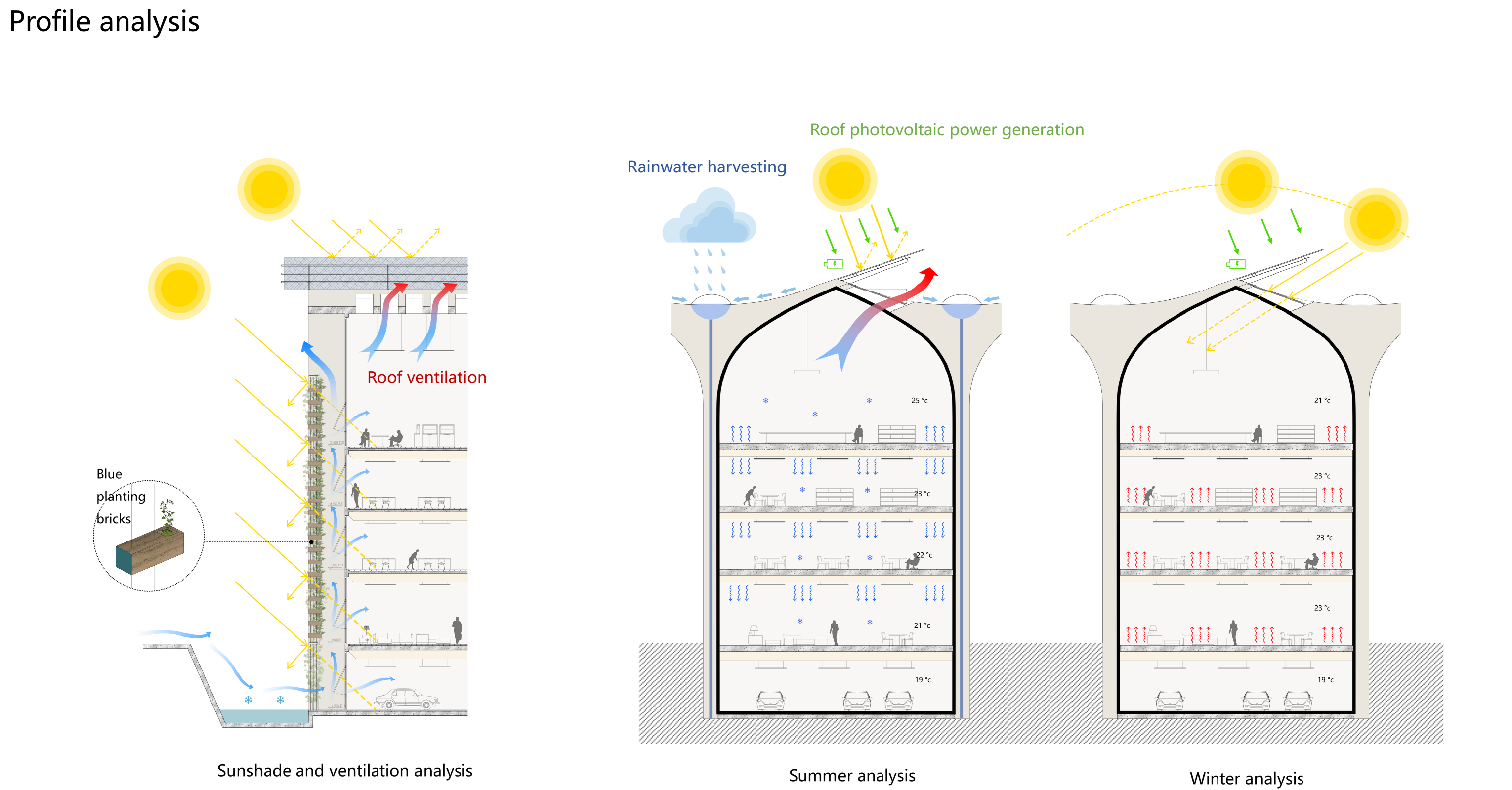
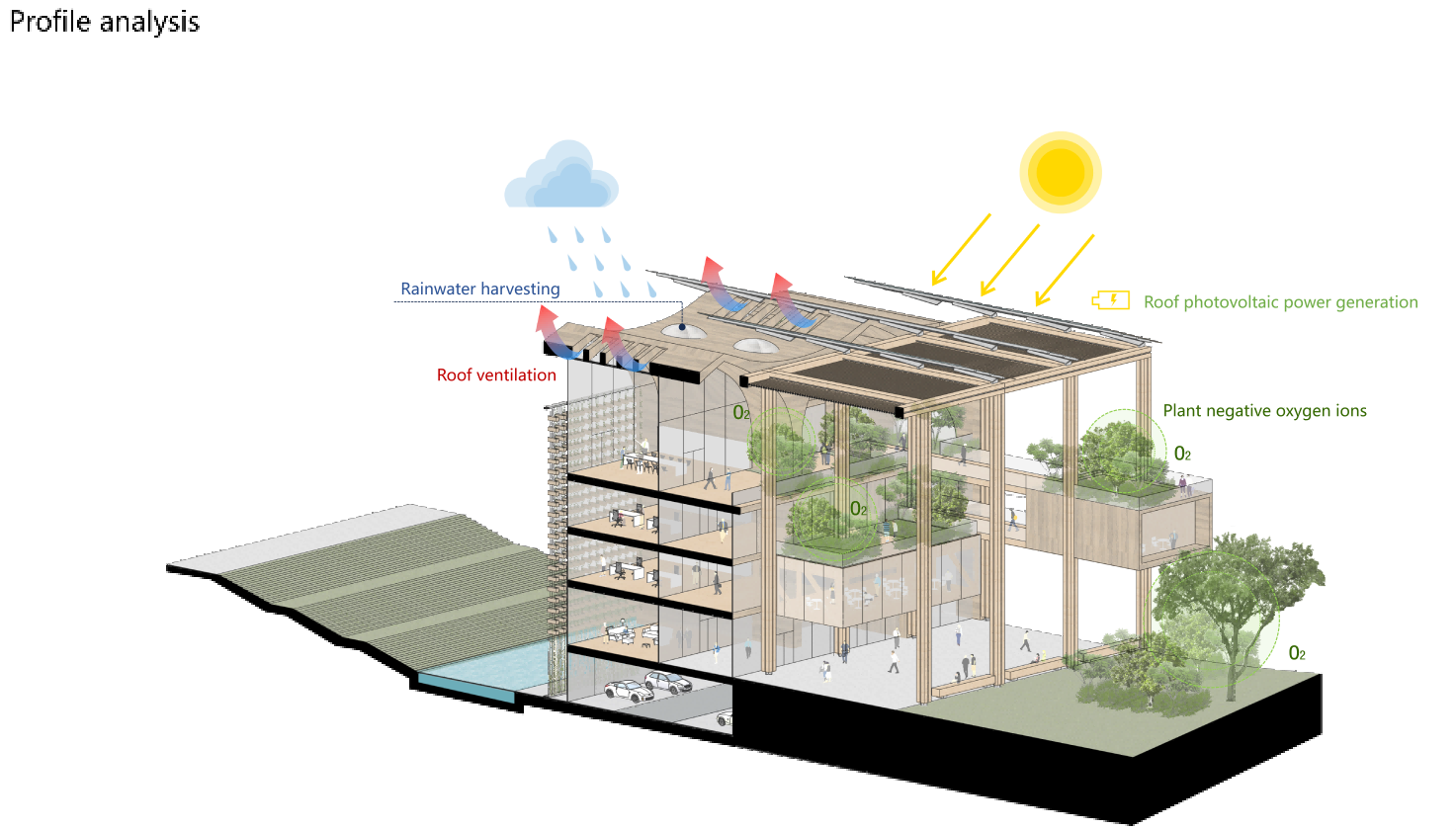
本项目积极响应低碳可持续的设计理念,从能源、水资源、微气候与生态景观四个维度,构建系统化的绿色技术体系。
- 夯土建筑材料:由于干旱的大陆性气候,当地自然景观与人文建筑都以黄土色材料为主调,所以本项目建筑外观设计以夯土材料为主,减少碳足迹;其次,土坯具有良好的保温隔热性能,可降低采暖和空调需求,耐久且耐候;此外,与其他建造方法相比,土坯的施工成本较低。
- 屋面光伏发电:利用建筑屋面铺设光伏板,将太阳能转化为电能,为公共照明及部分设备供电,降低运营能耗与碳排放,实现建筑自身的产能与节能。
- 雨水收集系统:通过屋面及场地雨水收集装置,将自然降水导入蓄水模块,经过滤处理后用于景观灌溉及场地清洗,减少市政用水依赖,缓解城市排水压力。
- 屋顶通风设计:利用热压通风原理,在屋面设置可控通风口,促进室内外空气交换,改善夏季室内热环境,减少空调使用时间,实现被动式降温。
- 彩色种植砖:在景观地面或屋面绿化区域采用蓝色种植砖(透水种植一体化模块),兼具雨水渗透、蓄滞、蒸发降温与植物生长功能,增强场地蓄水能力,缓解热岛效应,丰富生态界面。
通过以上策略,本项目形成“产能、蓄水、通风、绿化”一体化的绿色技术闭环,在提升使用者舒适度的同时,最大限度降低对自然资源的消耗,体现当代建筑与生态环境共生的设计态度。
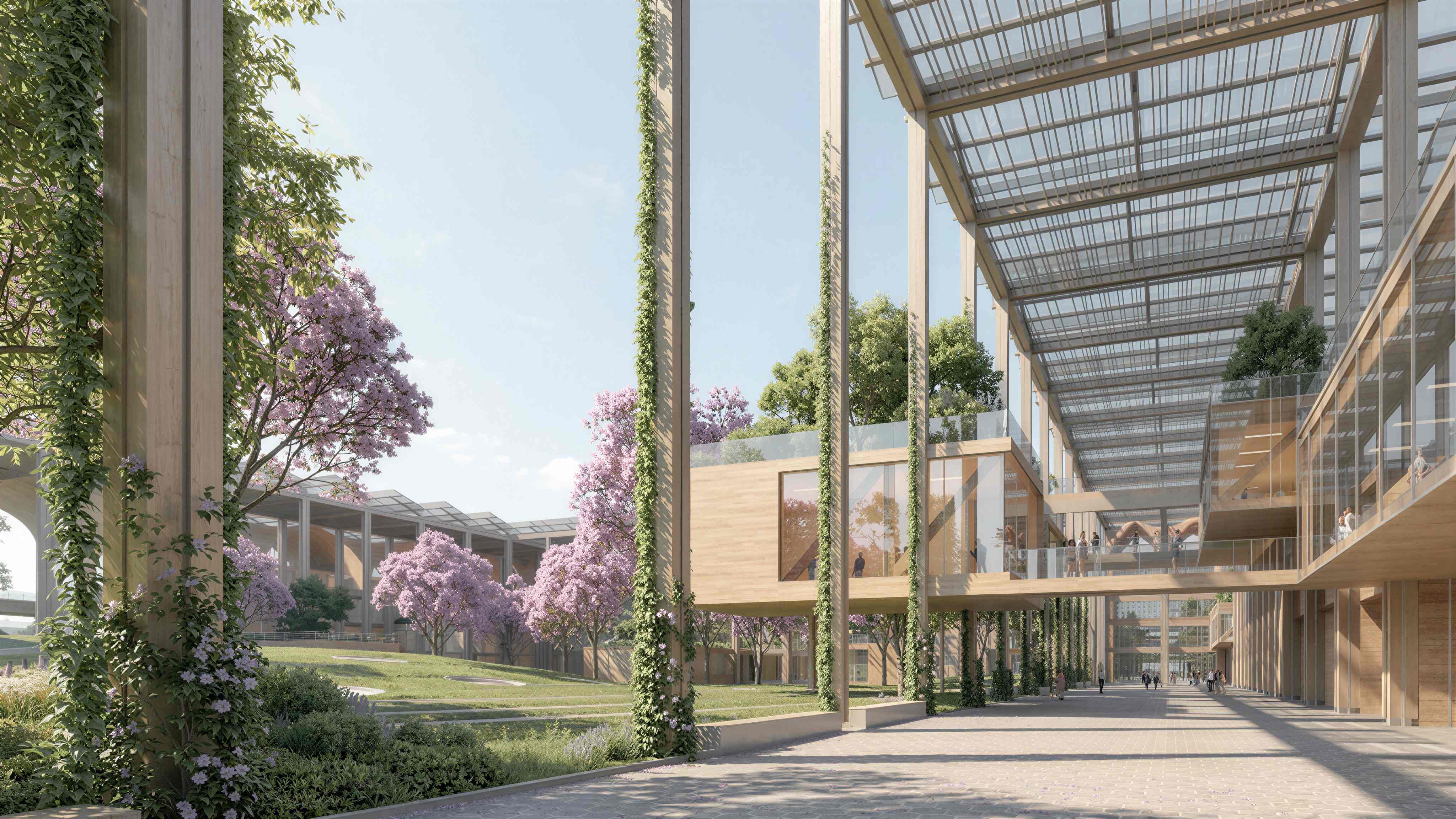
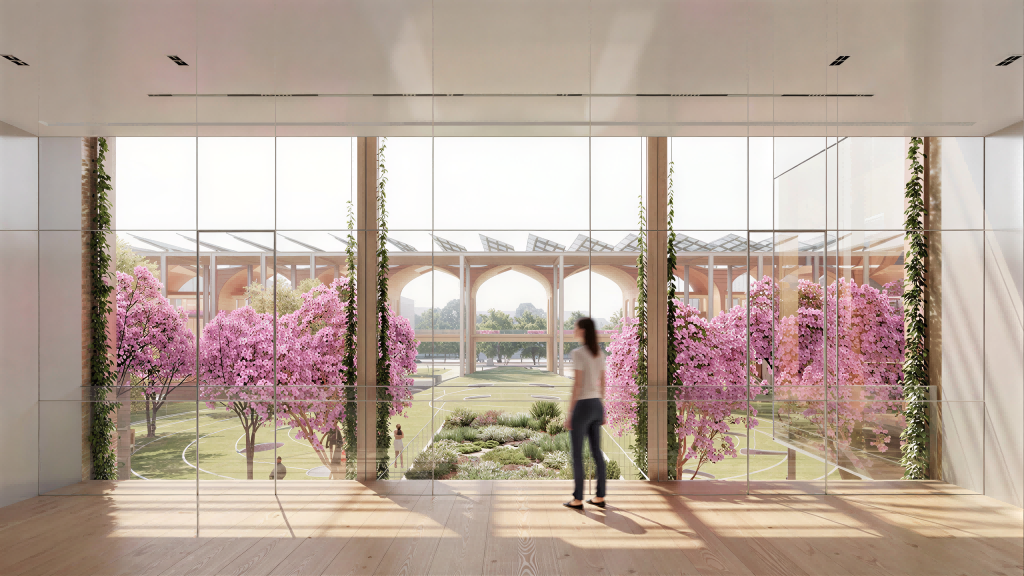
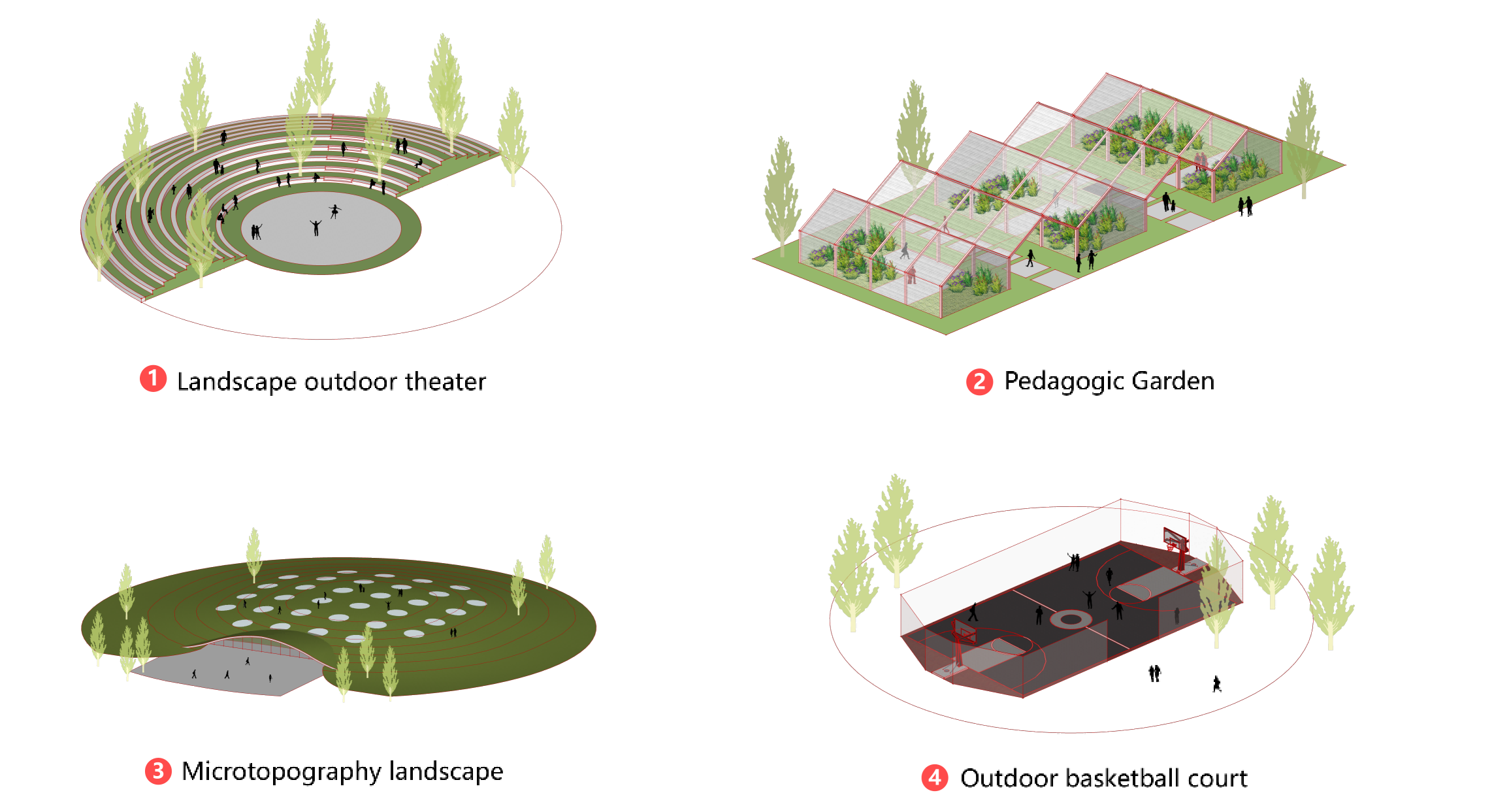
▼场地景观设计,Lanscape
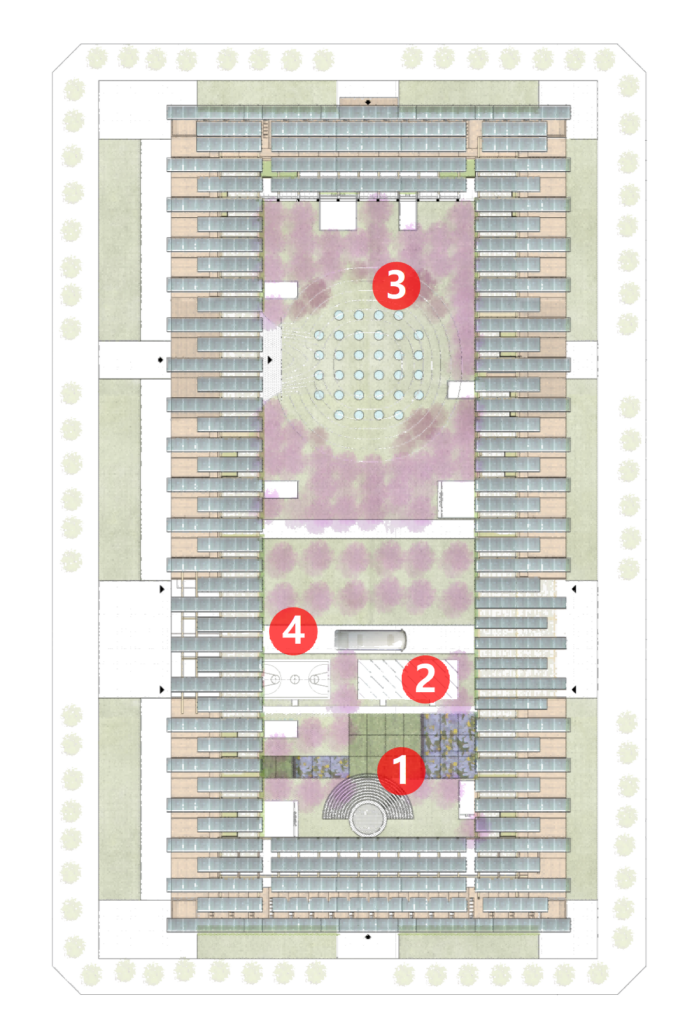
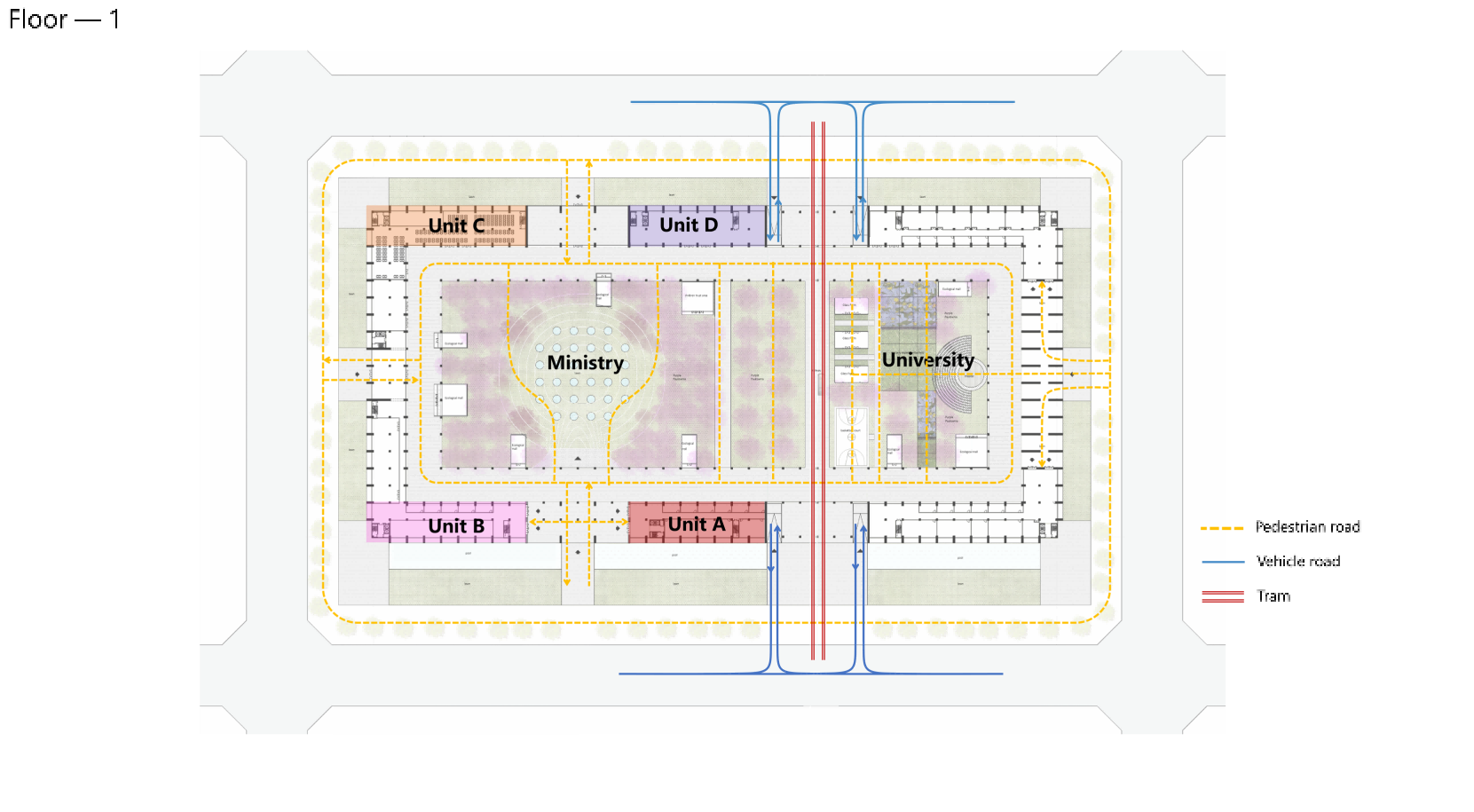
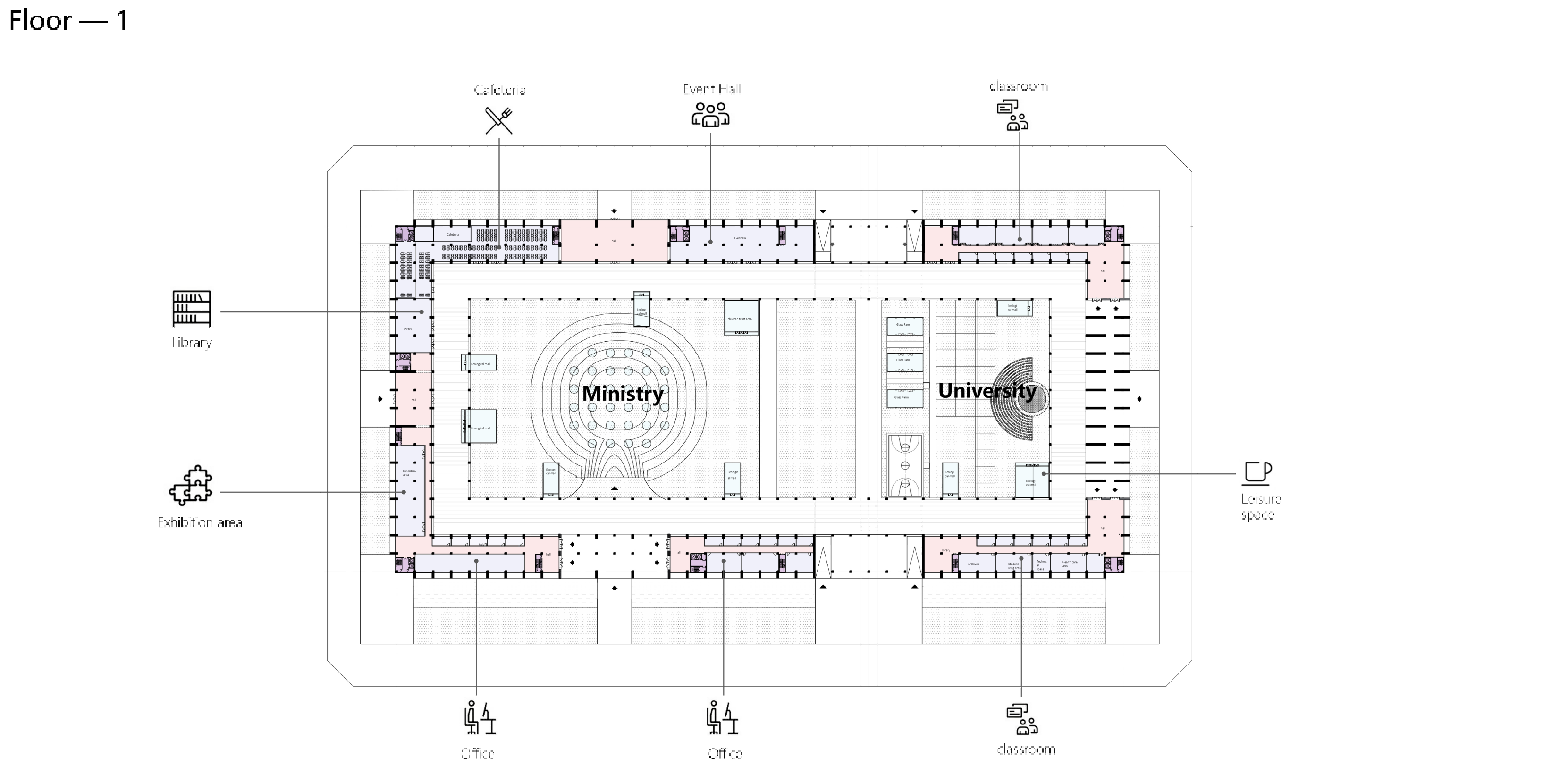
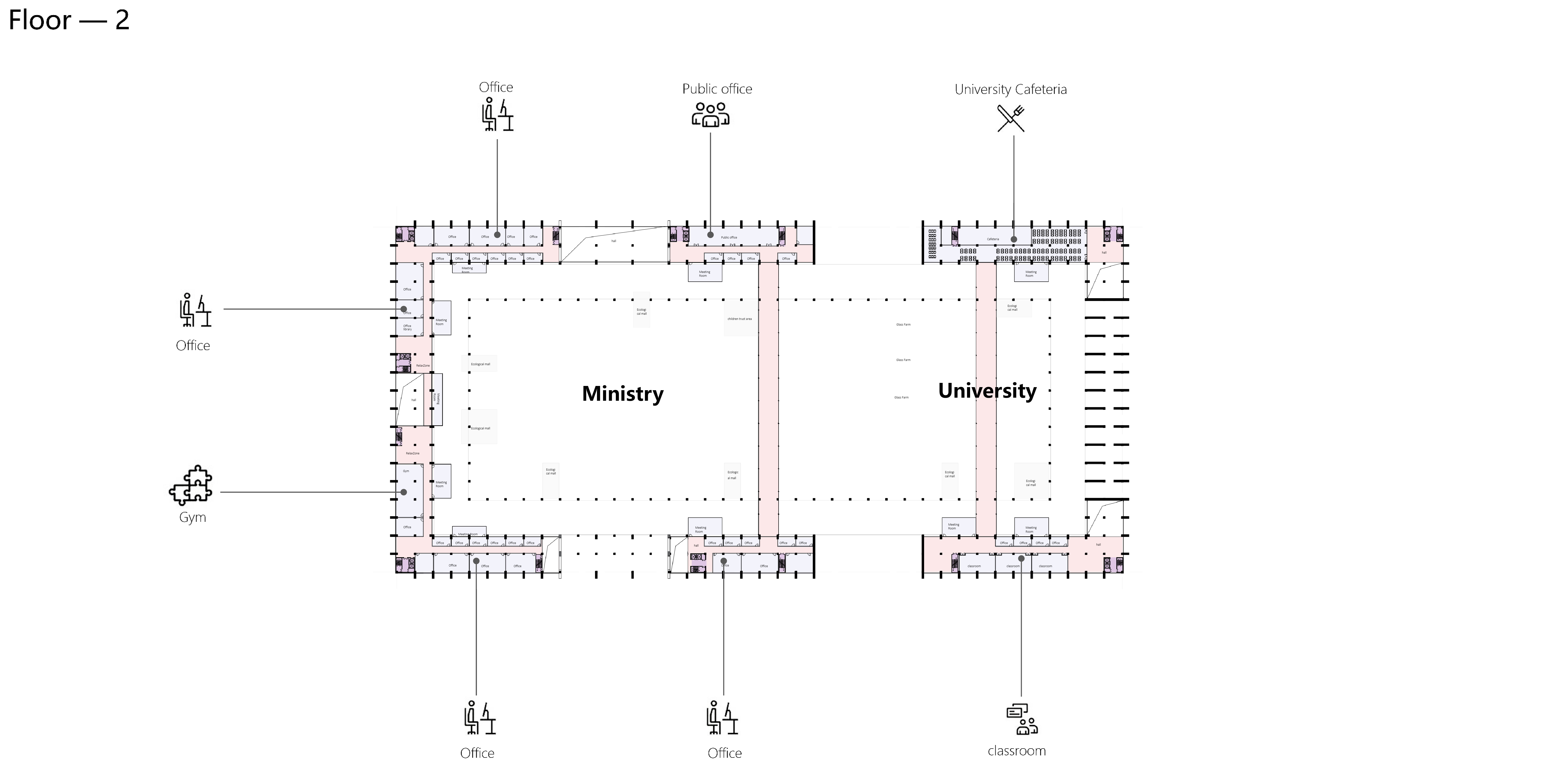
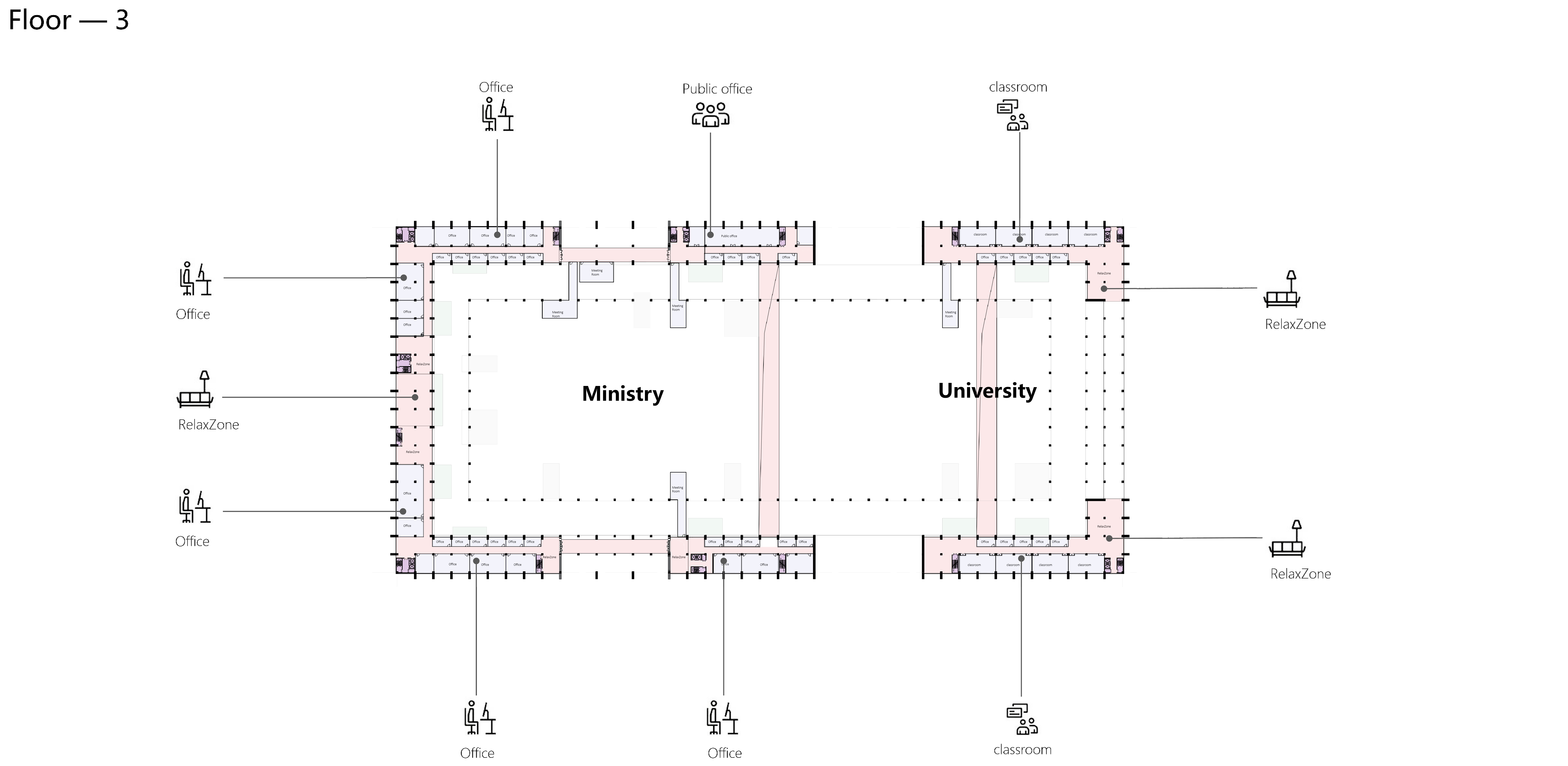
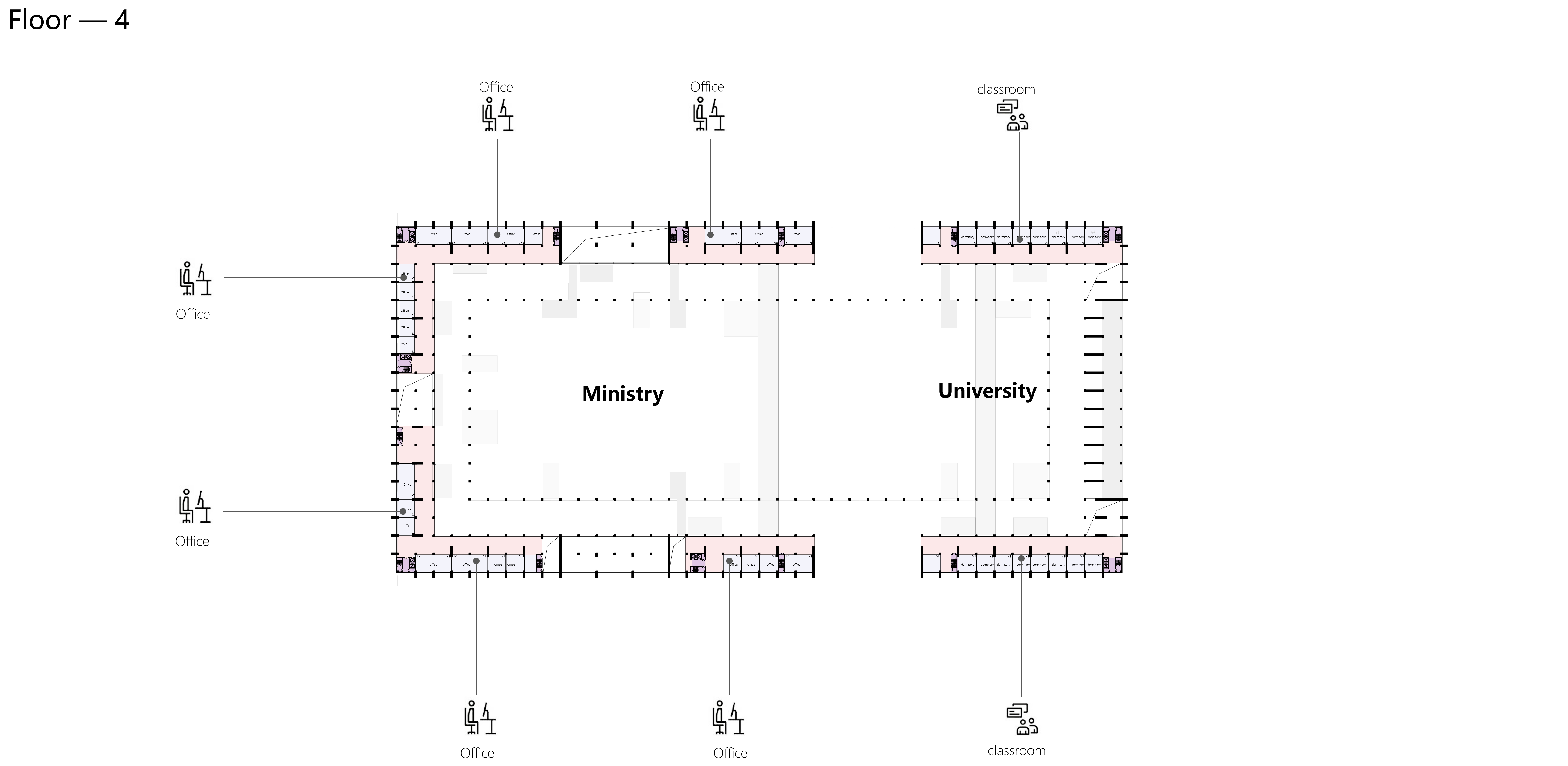
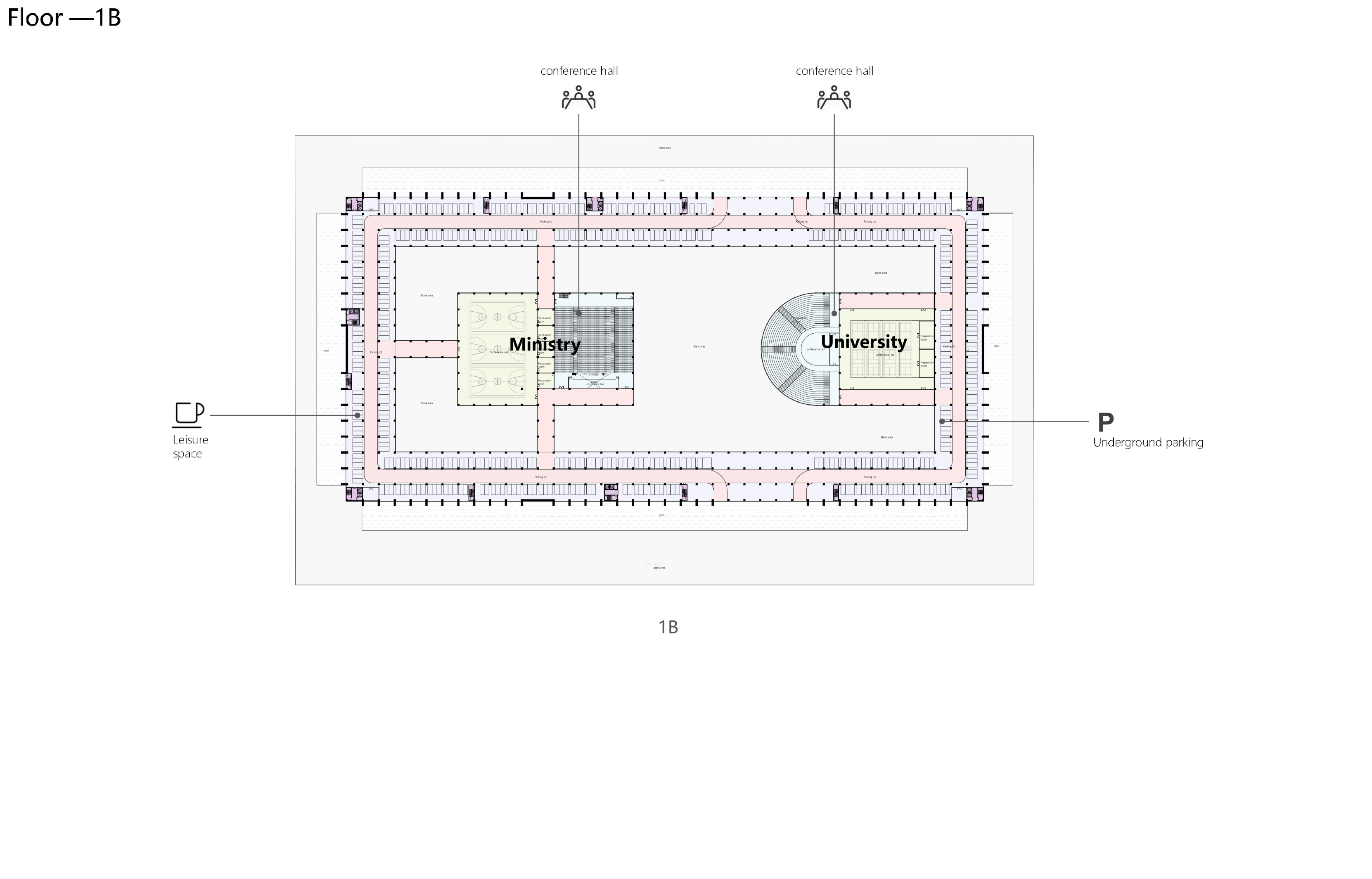
▼平面图,Plan